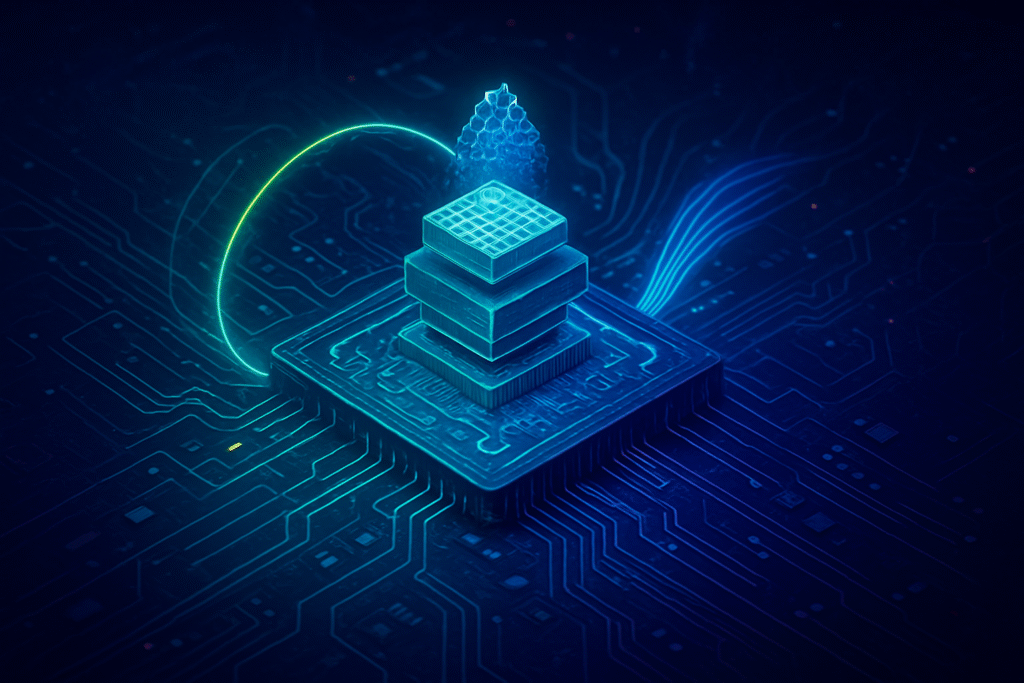
Beyond Silicon: The Materials Powering Tomorrow’s Supercomputers
By [Your Name]
For more than five decades, silicon has been the lifeblood of computing. It powered the microprocessor revolution, fueled the internet era, and helped usher in artificial intelligence. But silicon’s reign is nearing its physical limits. As transistors shrink toward atomic scales and computational demand explodes, a new wave of materials is emerging—each poised to shape the next generation of supercomputers.
The future of extreme computation won’t rely on a single breakthrough but on a portfolio of next-generation materials engineered for speed, efficiency, and new physics. Here are the materials that will define the post-silicon era.
1. Graphene: The One-Atom-Thick Wonder
Graphene, a single layer of carbon atoms arranged in a honeycomb pattern, has captivated scientists for over a decade. Its appeal lies in extraordinary properties:
- 200× stronger than steel
- Excellent thermal conductivity
- Electrons move through it 100× faster than in silicon
Graphene-based transistors promise terahertz speeds—orders of magnitude beyond what traditional silicon can achieve.
Although manufacturing challenges remain, hybrid graphene-silicon chips are likely the first commercial step, boosting speed and cutting heat in high-performance computing systems.
2. Silicon Carbide (SiC) and Gallium Nitride (GaN): The Power Efficiency Champions
While silicon struggles with heat and high voltage, SiC and GaN thrive in extreme conditions. These wide-bandgap semiconductors deliver:
- lower power loss
- higher voltage tolerance
- superior thermal efficiency
Today, SiC and GaN are replacing silicon in power electronics, but their biggest impact may be enabling energy-efficient supercomputers, where cooling demands are one of the largest cost drivers.
By reducing wasted energy, these materials could reshape the economics of exascale and zettascale computing.
3. Photonic Materials: Computing With Light Instead of Electrons
Photonic computing moves data using light, not electricity. The materials enabling this revolution include:
- Silicon photonics (for optical data routing)
- Indium phosphide (for lasers and modulators)
- Chalcogenide glasses (for phase-change optical memory)
Why light?
- near-zero signal loss
- ultra-high bandwidth
- almost no heat generation
The result: processors that communicate internally at the speed of fiber networks.
Future supercomputers may be hybrid systems where photons handle communication and electrons handle logic—dramatically improving throughput.
4. 2D Materials Beyond Graphene: The New Elemental Ecosystem
Graphene opened the door to a universe of single-layer materials known as transition metal dichalcogenides (TMDs), such as:
- molybdenum disulfide (MoS₂)
- tungsten diselenide (WSe₂)
- hexagonal boron nitride (hBN)
These materials bring unique capabilities:
- ultra-thin logic transistors
- flexible, stackable circuits
- tunable electronic and optical properties
Stacking 2D materials like Lego bricks may enable atomically engineered processors—customized layer by layer for memory, sensing, cooling, or logic.
5. Quantum Materials: The Foundation of Quantum Supercomputers
Quantum computing requires materials that behave in ways classical physics can’t explain. These include:
Superconductors
Materials like niobium or aluminum that carry electricity with zero resistance at low temperatures.
Topological materials
Exotic substances where electrons move in protected states, reducing error rates.
Diamond nitrogen-vacancy centers (NV centers)
Atomic-scale defects in diamond that can store and process quantum information with remarkable stability.
These quantum materials won’t replace silicon—they’ll create an entirely new class of computational machines capable of simulating chemistry, physics, and cryptography problems that classical computers can’t touch.
6. Neuromorphic Materials: Computing Inspired by the Human Brain
Future supercomputers may mimic the brain using materials that act like synapses:
- Memristive materials (e.g., titanium dioxide)
- Phase-change alloys (e.g., GST—germanium, antimony, tellurium)
- Organic semiconductors (bio-inspired materials)
Neuromorphic chips built with these materials promise:
- massive parallelism
- ultra-low energy consumption
- real-time learning without cloud support
These systems excel at pattern recognition and sensory processing—tasks silicon struggles with at scale.
7. Diamond and Other Extreme Materials: Solving the Heat Problem
As computing intensifies, heat becomes one of the biggest obstacles.
Diamond, with its unmatched thermal conductivity, is emerging as a next-gen material for:
- heat spreaders
- chip substrates
- optoelectronic components
Other exotic materials—such as boron arsenide—may outperform diamond itself in thermal performance, enabling denser, faster chips.
Conclusion: A New Material Era Is Beginning
The post-silicon future won’t belong to a single miracle material. Instead, tomorrow’s supercomputers will be powered by an ecosystem of advanced substances—each chosen for its unique strengths:
- Graphene for speed
- SiC/GaN for power efficiency
- Photonic materials for bandwidth
- Quantum materials for new physics
- Neuromorphic materials for brain-like learning